

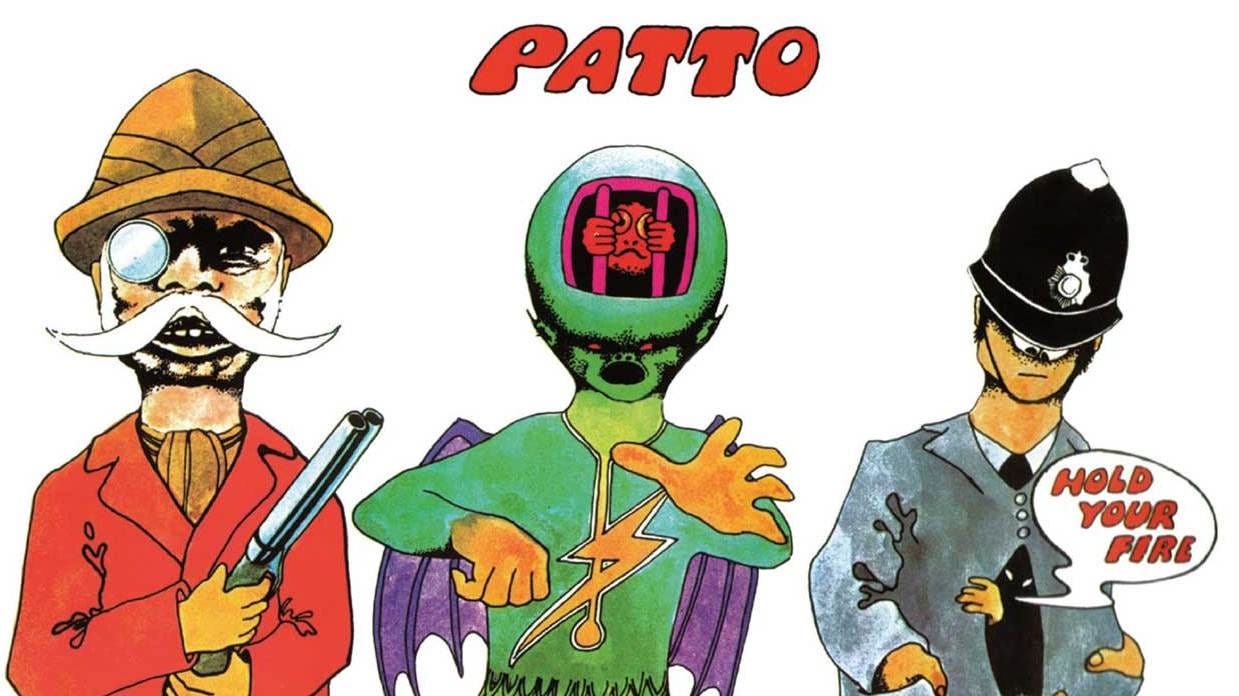
Writing is work. (Do not let any person contradict that statement!) Especially elusive, evasive, erratic. It comes and goes like the moon and burns like the sun. Words freeze a moment or ignite a passion. Letters put on paper or spluttered in protest become immortal or inflammatory. Who chooses?
Words do. Written on parchment, paper, or goat skin. Words change(d) the world. Word = World ? There is no lasting civilization without cooked meat and written words. Words are not just foundational and formative, they are stepping stones to experience, knowledge, and intergenerational wisdom. Exclusive to Humans.
I love how Substackistan is going thru another chaotic turbulent episode. People, Substack is words spoken in an attempt to prevent killing. It’s called ARGUMENT
Can We Argue?

What is an argument? And why do we have them? Are they, or should they be, always antagonistic? Are they emotionally damaging? Are they to be avoided?
Freud’s observation that civilization began the day a man cast a word instead of a stone is inverted. Words become stones, so stones become just another vocabulary.
Substack is the Modern Public Square. Nothing else is like it now. The Crown decided that they liked neither the written word nor the spoken. What came next defined and realigned the world. Now, we stand on the Substack Soapbox with words. Nothing more. Nothing less. Is the Pen mightier than the Sword?
Ban this. Block that. Prevent me from reading words that make me SAD!!!!
SAD???? Rhymes with glad, mad, bad, lad, fad, gad, nad, and about 18 other words in English. I’m sure there are many more in countless colliguials.
Who’s counting? Oh wait, that’s numerology. What’s your Word?

You, you point your finger
Stare, you feel no shame
Raise your hand in anger
Swear that I’m insane
You, you smell my freedom
Makes you squirm because I smile
How you hate my long hair
Call my music vile
You call me a junkie
Call me filth and scum
Keep me from your daughter
But my time will surely come
You, you joined the army
Fought a bloody war
Came home with a trophy
Turned into a bore
You, you think you’re civilised
With your connections you can’t fail
But you treat your wife and family
Like you bought them in a sale
You, you’re blind to beauty
Only power can quench your thirst
You scream to bring back birching
Keep a list who should be first
You, you slowly fester
Gripped by your disease
Despise your next door neighbour
Strange he feels like me
Me I’ve felt your anger
Me I’ve felt your scorn
Me I don’t know nothing
Me I’ve just been born
Me I’m slowly learning
To bide my time and wait
Me I’ve grown accustomed
To the burden of your hate
But remember when you point and stare
And wave your arms up in the air
When you bastards die
We’ll still be here then we’ll take over
The riddle is not cute. It is a trap that modern slogans have walked us into. Once both speech and the refusal to speak are defined as violence, the category of violence expands until it covers every possible human state. Nothing nonviolent remains. The only residual act left with any distinct force is the literal bullet, the one that actually stops the heart, ends the argument, and settles the score the old-fashioned way. That is the logical endpoint. Everything else has already been declared violence by fiat.
This is not abstract theory. It is the operating system of a particular class of people who now dominate cultural institutions: adult-adolescents with advanced degrees who know astonishingly little about how the world actually works, who experience downward mobility despite their credentials, and who have been raised in a consumer lifestyle that collides hard with any remaining pioneer ethic of self-reliance, resilience, and facing hard truths head-on.
Our Adolescent-Forever Class

The great thing about getting older is that you become more mellow. Things aren't as black and white, and you become much more tolerant. You can see the good in things much more easily rather than ge…
When and where these claims were made
“Words are violence” and “speech is violence” have academic pedigree and campus enforcement power. Toni Morrison, in her 1993 Nobel lecture, said: “Oppressive language does more than represent violence; it is violence; does more than represent the limits of knowledge; it limits knowledge.” She was describing the systematic looting of language for mastery and subjugation, the racist, sexist, state, or academic dialects that police thought. It was a literary and moral warning, not a green light for physical retaliation.
In 2017, psychologist Lisa Feldman Barrett argued in the New York Times that certain speech produces chronic stress that physically rewires the brain, shortens life, and therefore qualifies as violence. Jonathan Haidt and Greg Lukianoff answered in The Atlantic that the leap from “words can cause stress that harms” to “words are violence” is a category error. Gossip, heavy homework, or a bad performance review also cause stress. None of them are violence. Treating ordinary disagreement as assault makes students more anxious and more willing to justify actual force as self-defense.
Campus practice followed. Cornell students shouted “Your words are violence” at Ann Coulter. The University of Colorado Boulder pride office warned that misgendering could be considered an act of violence. After the 2025 assassination of Charlie Kirk while he was speaking on a college campus, a FIRE survey still found 91 percent of undergraduates agreeing that words can be violence. Nearly half said the statement completely or mostly described their thoughts. The equation had already done its work. If speech is violence, then stopping the speaker with force looks like justice rather than escalation.
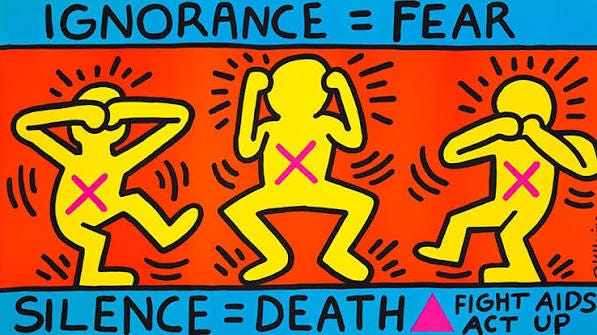
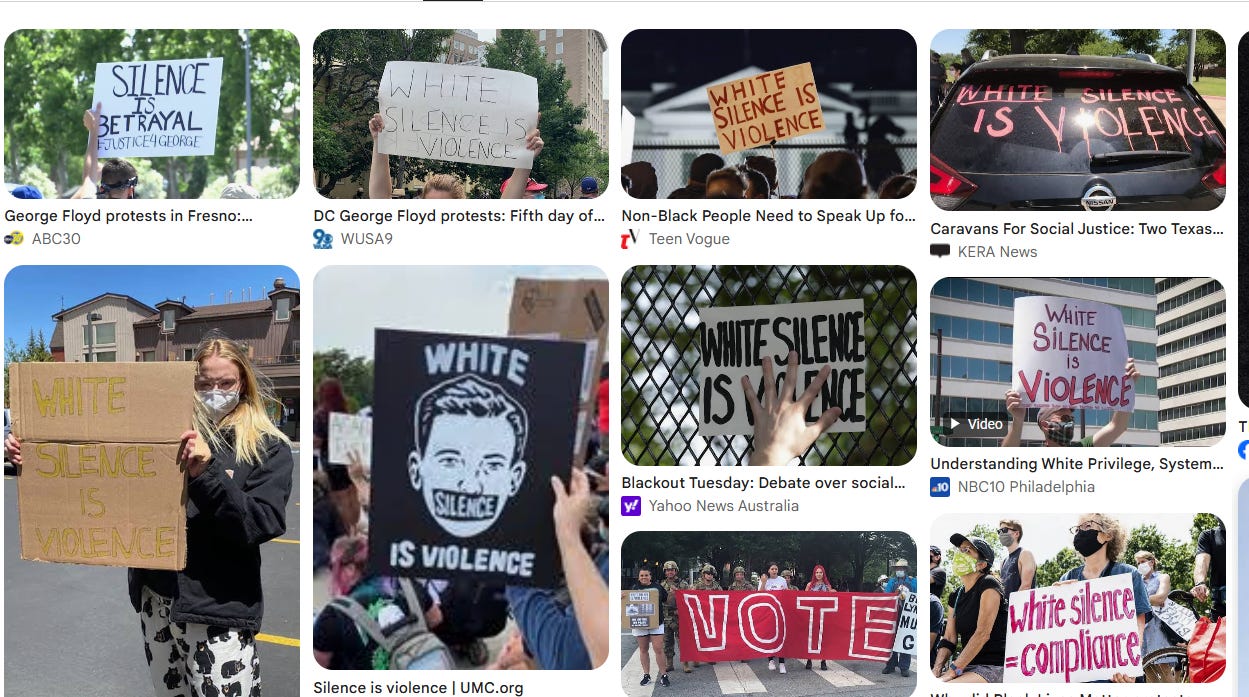
“Silence is violence” exploded in 2020 during the George Floyd protests, especially in the form “White silence is violence.” The claim was that withholding public affirmation of the approved narrative is itself an act of violence, complicity by omission. Earlier versions existed. ACT UP’s 1980s “Silence = Death” poster treated inaction on AIDS as fatal. The 2020 version demanded affirmative speech. Neutrality vanished. You either performed the correct words or you were violent.
Why both cannot be true at once
If every utterance is potential violence and every refusal to utter is violence, then human communication itself becomes a continuous act of violence. There is no safe harbor. Speak and you risk violence. Stay quiet and you commit violence. The only coherent next step is to treat the remaining distinction, physical force, as either the purest form of the same continuum or the only honest response left. The bright line between persuasion and coercion disappears. Freud’s observation that civilization began the day a man cast a word instead of a stone is inverted. Words become stones, so stones become just another vocabulary.
This is not semantics. It collapses the moral and legal distinction that lets free societies function. Once the equation is accepted, the person who argues is already the aggressor. The person who answers with fists or bullets is merely matching force with force.
The adult-adolescents who enforce it
Look closely at who pushes these slogans hardest. They are often people in their twenties and thirties with bachelor’s, master’s, or even doctoral degrees who still function like adolescents. They have credentials but lack knowledge. They can recite the latest theoretical framework yet struggle to explain basic history, economics, or the mechanics of everyday competence.
Surveys of college learning have long shown large numbers of graduates making little measurable progress in critical thinking over four years. Many leave campus still living at home, underemployed in jobs that do not require the degree, or carrying debt that delays the markers of actual adulthood: independent housing, stable work, family formation.
This is downward mobility dressed up as progress. College was once a reliable engine of upward movement. The relative wage premium for lower-income students has declined sharply over decades. Underemployment remains stubborn for large shares of recent graduates. Advanced degrees pile on more debt while the practical return often fails to match the marketing.
The result is a class of credentialed people who feel both entitled and precarious. They occupy positions in universities, media, human resources, nonprofits, and cultural gatekeeping roles, yet many experience the economic and social status of people a generation or two below their parents.
Their mindlessness is not stupidity. It is selective. They know the approved language of harm, safety, and identity with precision. They do not know, or refuse to know, the older disciplines of evidence, trade-offs, or personal responsibility. Argument becomes dangerous because it threatens the fragile identity built on those credentials and that language. Silence becomes dangerous because it withholds the ritual affirmation that keeps the group coherent. The slogans protect the group from the discomfort of reality.
Consumer lifestyle versus pioneer ethic
This class was raised inside a consumer lifestyle that treats comfort, curation, and emotional safety as birthrights. Experiences are products. Identity is a brand. Discomfort is a defect to be returned or regulated. Safe spaces, trigger warnings, and the expansion of “violence” to cover words are the logical extensions of a culture that sells protection from friction. The marketplace of ideas is replaced by a curated feed. Hardship is outsourced or medicalized.
Contrast that with the pioneer ethic that once defined large stretches of American character. The frontier demanded self-reliance because no one was coming to soothe your feelings when the weather turned or the crop failed. Rugged individualism was not pure isolation. It required cooperation within tight local groups, but it began with the assumption that an adult handles difficulty without first demanding the world rearrange itself.
Argument was part of the toolkit. You tested ideas against reality and against other people because the cost of being wrong was high. Silence could be prudence, rest, or the simple recognition that not every thought needs public performance.
The consumer lifestyle and the pioneer ethic rub against each other like sandpaper. One produces adult-adolescents who treat disagreement as an attack on the self. The other produces people who treat disagreement as information.
One expands the definition of violence until the only remaining honest instrument is the actual bullet. The other keeps words as the preferred alternative to force precisely because words can be answered with better words.
The cultural formula Compass Star Wordsmith works with - life divided by the five elements of food, music, art, craft, and history equaling culture - has no room for permanent adolescence.
Craft requires competence. History requires memory. Art requires beauty. Music requires expression. Food requires hunger.
Culture combines all of the above. Each element demands the willingness to be wrong in public and to correct course without declaring the correction an act of violence against the self.
The piece that still insists we can argue
“Can We Argue?” opens by acknowledging enjoyment of the fight, notes the family discomfort that comes with it, and traces the word itself. Argument is defined as “a coherent series of reasons, statements, or facts intended to support or establish a point of view.” It is also “an angry quarrel or disagreement.” The post quotes the full dictionary range, then turns to the classical sense of rhetoric as intention, audience, and structure rather than a map of the author’s private mind. It recalls Grandpa Smitty forcing Monty Python’s “Argument Clinic” sketch, the pure, almost mechanical contradiction for its own sake, stripped of personal venom. It warns of the Contrarian Fallacy, the cheap move of dismissing one claim by simply pointing to another unrelated evil, and of the real risks. Burr and Hamilton settled an argument with pistols. Families exile each other to the kids’ table. Bad-faith argument produces shame and trauma. Yet the close is clear: “Keep arguing.”
That essay treats argument as both dangerous and necessary, the alternative to worse tools. It assumes a space in which reasons can still be offered without the offering itself being declared an assault. The slogans under discussion erase that space. If words are already bullets, then the Argument Clinic is a shooting gallery and silence is a different caliber of the same weapon. There is nothing left to do but load.
The adult-adolescents with the degrees and the downward mobility have little use for that essay. Their consumer-trained nervous systems experience the coherent series of reasons as a threat to the curated self. The pioneer ethic would recognize the essay as maintenance work on civilization itself.
Three roads
Road 1
Accept the equations fully. Speech that wounds feelings or challenges identity is violence. Silence in the face of the approved crisis is violence. Therefore the only moral response is compelled speech plus preemptive silencing of the wrong speakers. Cancelation, deplatforming, and, when necessary, physical disruption become self-defense. The society that takes this road ends with orthodoxy enforced by social and eventually legal force. Private conscience and genuine argument die together. The adult-adolescents keep their positions. The pioneer ethic is treated as nostalgia or oppression. Bullets become the honest currency once the verbal ones are exhausted.
Road B
Reject both equations as category errors that cheapen real violence. Words can wound. Silence can be cowardly or complicit in specific contexts. Neither is identical to the application of physical force. Restore the distinction. Treat argument the way “Can We Argue?” does: as a coherent series of reasons, risky, emotional, sometimes ugly, but the civilized alternative to the duel. Keep the Monty Python clinic open. Let people be wrong out loud. Demand that advanced degrees come with actual knowledge and the emotional durability to handle disagreement. The consumer lifestyle can still deliver comfort, but it no longer gets to redefine the basic terms of adult life. The bullet stays in its separate category, the one that ends conversation forever.
Road C
Draw narrow, honest lines. Credible threats, direct incitement to imminent lawless action, and true moral complicity in ongoing atrocity (the classic case of silence when you know and can act) carry real weight. Chronic verbal abuse can damage. None of that requires declaring ordinary disagreement or political speech “violence,” nor does it require turning every pause into guilt.
Preserve the possibility of arguing, detached enough to reason, engaged enough to care, exactly as the 2021 essay defends it. Require the credentialed class to know something beyond the latest moral vocabulary. Reintroduce the pioneer expectation that adults handle friction without first expanding the definition of harm until nothing remains outside it. The riddle’s final term, the literal bullet, remains the thing we are trying to keep rare by keeping words and silence available as non-violent options.
The riddle only works if we refuse to answer it with the third option. Once both speech and silence are violence, the only thing left that still draws blood on contact is the actual bullet. That is not a metaphor. It is the destination the slogans have already mapped, and the adult-adolescents with the degrees and the downward mobility are the ones holding the map while the pioneer ethic watches from the edge of the clearing, waiting to see whether anyone still remembers how to build a fire without first demanding the forest apologize for the cold.
Well then, choosing my words wisely as I bid you good day.
Ric

Amen. On the plus side, I see a lot of my sons' friends rejecting this mentality entirely. No one will ever accuse them of being cowboys (they're products of a college town, after all), but they're resilient, not afraid to try things, and regularly pressure test themselves/each other.