
Nazi Free Substackistan?
Remember the good old days of the 'stack? When no voices of the left would "legitimize" Substack because of "the Nazi problem. Well, they're here for you!

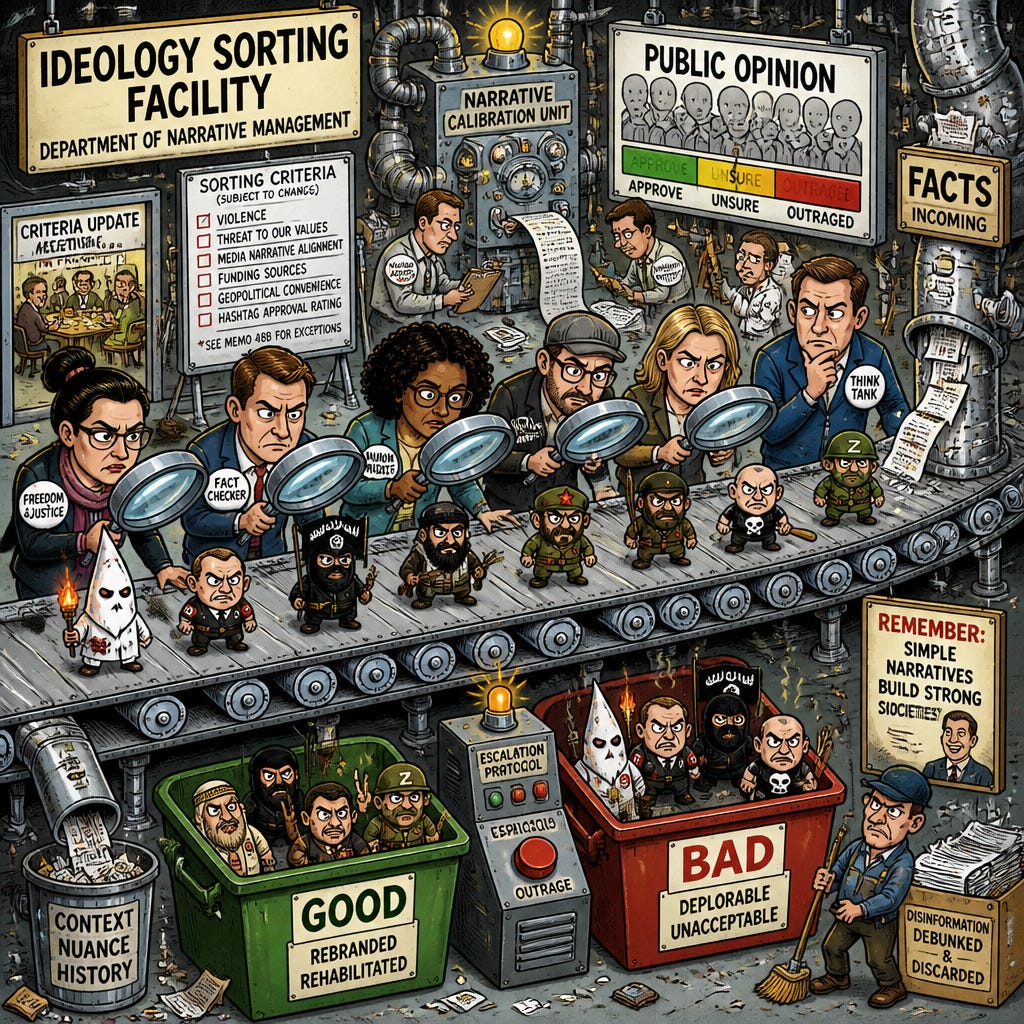
Back in late 2023, Jonathan M. Katz dropped the Atlantic piece that lit the fuse: “Substack Has a Nazi Problem.” He scoured the platform and flagged 16 newsletters with overt Nazi symbols or white nationalist vibes out of thousands upon thousands of creators. Legacy media ran with it. Pearl-clutching headlines warned that open platforms would mainstream evil if left unchecked. Legitimizing Substack? Never. Better to keep the old gatekept gardens where approved curators decided the Overton window.

Springtime Echoes, Yard Reality

I built on that in “Springtime for Substack”, drawing straight from the actual yard in Folsom and beyond. Real Nazis and Aryan Brotherhood shot-callers weren’t subtle Substack writers penning manifestos. They were face-tatted enforcers running chow lines, TV channels, and cell blocks by raw tribal power and fear. Swastikas weren’t edgy logos for clicks; they were armor in a world of scarcity and violence. “Left of boom” wasn’t online discourse. It was survival: spot the real threat early or pay the price.
Substackistan was never that yard. It was decentralized freedom: no central shot-caller, no ministry of truth. Bad ideas get aired, challenged, ratio’d, debunked, or ignored in the open marketplace of ideas. The “Nazi problem” was always more cudgel than crisis. It served as a narrative tool when decentralization threatened the old monopoly on discourse.
The Platner Test Today
Fast-forward. Look across Substack and progressive circles right now. Graham Platner, progressive Democrat, Marine vet, oyster farmer, now Maine Democratic Senate nominee, sports (or sported) a chest tattoo resembling the Totenkopf (Death’s Head), the skull-and-crossbones emblem of Nazi SS units. He says he got it drunk in Croatia as a young Marine, didn’t grasp its Nazi ties for years, has disavowed it, and covered it up. Ex-girlfriends, texts, and old posts fueled the fire. Yet significant support flows from the same political mindset that once amplified the Substack panic: populist-left voices, Medicare for All advocates, anti-establishment Substackers, and strategists who see him as a rule-breaking fighter worth backing despite the ink.
The hypocrisy stands out. The same circles that hunted rounding-error Nazis on open platforms now rally for (or downplay) a candidate with the actual symbol. Jonathan Katz’s direct stance on Platner isn’t a loud public intervention I’ve seen, but the broader pattern is clear: symbols and associations that once triggered full moral panic get contextualized or forgiven when they land on “one of ours.”
The SPLC Parallel: Manufacturing the Very Hate They Fundraise Against
This isn’t isolated. Enter the Southern Poverty Law Center (SPLC). For decades, the SPLC positioned itself as the premier hunter of racists and Nazis, maintaining “hate maps,” labeling organizations, and raking in donor millions by sounding the alarm on extremism. In April 2026, a federal grand jury indicted them on wire fraud, false statements, and money laundering charges. Prosecutors allege the SPLC secretly funneled over $3-4.1 million in donor funds (2010-2023) to leaders and members of actual extremist groups: Ku Klux Klan, Aryan Nations, National Socialist Party of America, National Socialist Movement, and others. Some informants allegedly stayed active promoting racism, helped plan events like Charlottesville’s Unite the Right, and used funds for rallies, materials (even cross-burning wood in allegations), and personal gain while the SPLC raised more money denouncing the very hate they were propping up.
SPLC defenders call it a legitimate “informant program” to gather intel and prevent violence (sharing some with law enforcement). Critics and the indictment call it manufacturing racism to justify existence: paying the shot-callers while scaring donors into writing bigger checks. The same outfit desperate to label and expose Nazis elsewhere allegedly ignored or subsidized them in their own network.
This is the pattern: the loudest Nazi-hunters keep inventing, inflating, or conveniently ignoring them when it suits the narrative. Real extremists exist and deserve vigilance. But “Nazi” has been bastardized for decades, stretched from genocidal totalitarians who industrialized mass murder to cover:
Dissent on immigration, crime data, or cultural cohesion.
Pushback against certain identity mandates or “equity” experiments.
Free speech defenders.
Anyone right of the approved line.
The word lost its edge. It became a moral weapon, a fundraising engine, a way to recentralize control. In the yard, I saw actual race-war hierarchies enforced by shanks and fear. On platforms and in politics, the inflation dilutes real threats while protecting “our side’s” exceptions.
My mixed-race family dinner table proves the human cost weekly: real flashpoints over race, politics, privilege, and history, but we keep seats at the table with food, music, shared stories, and hard-earned tolerance. Purity tests, label-flinging, and selective blindness fracture more than they fix. “Left of boom” means clear-eyed vigilance on genuine dangers, not narrative maintenance.
Left of Boom on the ‘Stack
Substack works when it stays raw: writers own their words, readers own their choices. No deplatforming for wrongthink short of clear legal lines. The Platner support and SPLC scandal expose the old panic for what it often was: less about swastikas, more about losing the gatekeeper role. Voices compete now. Better arguments, evidence, and lived experience usually win without censors.
Left of Boom

We’re not in Kansas anymore. Or maybe we never really were. Hell, looking back, I’ve spent chunks of my life realizing that the yellow brick road was just a painted-over cell block. The world in earl…
‘Substackistan isn’t Nazi-free in the absolute (no open space ever will be). But it’s remarkably free of the enforced monoculture that once ruled the web. Decentralized discourse, personal stakes, and cultural weaving from real life, that’s the feature. Prison red lines, recovery reckonings, family complexities: they belong here because they’re honest.
What do you think? Has “Nazi” been diluted into “person/group I dislike,” or is there still a sharp line worth defending? Was the Substack panic proportional, or mostly a tool against independence? How does the SPLC case change the trust equation? Comments open. Civil exchange is the point. Share if it resonates. Free speech travels when passed along.
Drop me a comment and engage -
Ric
Damn, so I am a nazy? Damn ...
I think the "Substack Panic" had it's roots in something much more cynical; pulling readers from one platform to another. One couldn't help but notice the loudest grievance merchants were also running subscription sales at the same time.