
Action is Gold
Friction, failure, and fulfilment. When "TRYING" replaced "DOING" it resulted in getting nothing accomplished but made everyone feel good. Now we're screwed.

Friction stalls; action liberates. Compass Star Wordsmith is a reader-supported publication, guiding you past resistance to self-reliant momentum. Subscribe free or paid to get new posts and fuel this journey. Let’s slip the grind together.
Friction is the mortal enemy of movement
In the grand theater of existence, where every soul is both actor and audience, there is a villain so insidious, so unassuming, that it slips beneath the spotlight unnoticed. It doesn’t roar like thunder or strike like lightning. It doesn’t demand allegiance or wield a scepter of power. No, this antagonist whispers, it grinds, it clings. It is friction—the mortal enemy of movement.
This simple declaration, “Friction is the mortal enemy of movement,” has haunted my thoughts like a half-remembered dream, pulling me from the edges of sleep into the cold clarity of dawn. As the quill-driver behind Compass Star Wordsmith, where I navigate the constellations of language to chart paths for wandering minds, I’ve long pondered the forces that propel us forward—or hold us captive in stasis.
Friction isn’t just a physicist’s footnote; it’s the existential drag on our ambitions, the quiet erosion of our momentum. Today, let’s dissect this foe, trace its tendrils through the landscapes of physics, psychology, and philosophy, and arm ourselves with strategies to outmaneuver it. For in understanding friction, we reclaim the fluid grace of movement that defines a life well-lived.
The Physics of Resistance: Where It All Begins
To conquer an enemy, one must first know its face. In the realm of the tangible, friction emerges from the pages of Newton’s laws as the force that opposes relative motion between two surfaces in contact. Picture a sled gliding across fresh snow: without friction, it would sail eternally, a perpetual arrow into the void. But introduce the grit of reality—the microscopic hills and valleys of atomic landscapes interlocking like reluctant lovers—and suddenly, energy dissipates. Heat builds, speed wanes, and what was poetry in motion becomes a laborious crawl.
Sir Isaac Newton himself, in his Principia Mathematica (1687), laid the groundwork, though he didn’t name friction outright. It was later formalized by Guillaume Amontons in 1699, who posited that frictional force is proportional to the normal force pressing surfaces together, independent of contact area. This is the stuff of everyday miracles thwarted: the bicycle chain that sticks in the rain, the door hinge that squeals in protest, the rocket exhaust fighting atmospheric drag on its ascent to the stars.
But why “mortal enemy”? The term evokes death, finality—a foe not merely annoying, but lethal to the very essence of progress. In physics, friction isn’t neutral; it’s dissipative. It converts kinetic energy into thermal waste, ensuring that no machine achieves 100% efficiency.
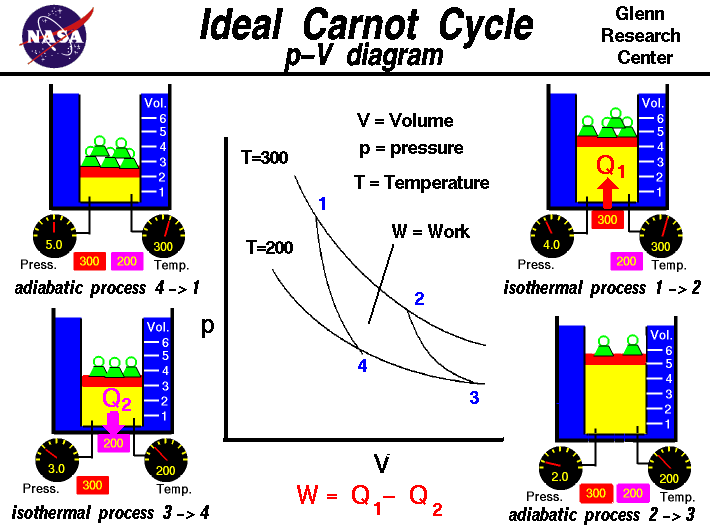
The Carnot cycle in thermodynamics whispers this truth: entropy always wins, and friction is its faithful herald. Consider the Mars rovers, those intrepid explorers of the red planet. Their wheels, designed with low-friction treads, still succumb to regolith’s abrasive kiss, grinding to a halt after years of defiant traversal. NASA’s Perseverance rover, as of 2023, has logged over 28 kilometers, but each meter is a battle won against the planet’s unyielding soil. Friction here isn’t abstract; it’s the difference between discovery and dust.
Yet, in this enmity lies a paradox. Friction enables grip—without it, we’d slip through life like ghosts on ice, unable to walk, drive, or even hold a pen to paper. Tires would spin futilely on rain-slicked roads; climbers would tumble from sheer cliffs. Charles-Augustin de Coulomb, refining Amontons’ work in 1785, quantified static versus kinetic friction, revealing how the former prevents motion altogether, while the latter merely hinders it. Static friction is the gatekeeper, the immobilizer; kinetic, the pursuer that nips at your heels. To move is to declare war on both.
As we transition from the laboratory to the labyrinth of the human spirit, remember: the principles that govern sliding blocks and spinning gears also script the stories of our stalled dreams. Friction’s grip extends far beyond the material world.
The Psychological Drag: When Mind Meets Matter
If physics provides the blueprint, psychology paints the battlefield. Here, friction manifests not as a force vector but as the invisible weights we carry—doubts, habits, fears—that resist the impulse to act. “Friction is the mortal enemy of movement” resonates deepest in this arena, where movement isn’t mere locomotion but the bold leap from intention to incarnation.
Behavioral economists like Daniel Kahneman, in Thinking, Fast and Slow (2011), describe this as “ego depletion,” the mental fatigue that builds like rust on unused gears. Each decision, each micro-choice, generates frictional heat, draining willpower until paralysis sets in.
Procrastination? That’s friction in its purest form: the static cling of “not now” holding you to the couch while your ambitions skid into oblivion. Studies from the American Psychological Association (2022) show that decision fatigue contributes to 40% of daily regrets, a statistic that underscores how this enemy doesn’t just slow us—it kills opportunities in their cradle.
Consider the entrepreneur at the kitchen table, cursor blinking over a blank business plan. The friction here is multifaceted: the fear of failure (what if it flops?), the inertia of comfort (why risk the steady paycheck?), the societal static of naysayers (”Stick to your day job”).
It’s the same force that kept J.K. Rowling’s Harry Potter manuscript rejected by 12 publishers before Bloomsbury took a chance in 1997. Each “no” was a frictional encounter, grinding her resolve, yet she pushed through, transforming literary movement into a global phenomenon.
In creativity, friction often masquerades as the blank page syndrome. As a wordsmith, I’ve stared down countless drafts where the first sentence flows like silk, only for the second to snag on doubt’s barbed wire. Julia Cameron, in The Artist’s Way (1992), calls this “the inner censor,” a frictional voice that whispers sabotage.
Her antidote? Morning pages—daily stream-of-consciousness writing to lubricate the gears of expression. It’s a reminder that psychological friction thrives in isolation; community, feedback, and ritual are the oils that ease the slide.
But let’s delve deeper into the neuroscience. fMRI studies from Stanford (2019) reveal that the brain’s basal ganglia, the movement command center, lights up not just for physical action but for initiating change. Dopamine, the neurotransmitter of motivation, surges to overcome frictional thresholds, but chronic stress floods the system with cortisol, thickening the resistance. In essence, our minds are engines prone to overheating, where friction isn’t external but a self-imposed tax on velocity.
This psychological lens reveals friction’s mortality: it doesn’t just oppose movement; it starves the soul of vitality. Unchecked, it leads to what psychologists term “learned helplessness,” a state where repeated frictional defeats convince us motion is futile.
Martin Seligman’s experiments in the 1960s with shocked dogs demonstrated this heartbreakingly—subjects stopped trying to escape electrified floors after futile attempts. Translate that to human terms: the dieter who abandons the gym after one slip, the writer who shelves the novel after a harsh critique. Friction kills not with a blade, but by attrition, eroding the will to move until we fossilize in place.
Yet, herein lies empowerment. Recognizing friction as enemy allows us to engineer countermeasures. Cognitive behavioral therapy (CBT) techniques, for instance, reduce decisional drag by reframing obstacles as surmountable inclines rather than impassable walls.
Apps like Habitica gamify progress, turning frictional hurdles into quests with rewards. The key? Momentum begets momentum. Newton’s first law applies to the psyche: an object (you) in motion stays in motion unless acted upon by a frictional force. Start small—a single step, a solitary sentence—and watch the enemy retreat.
Philosophical Undercurrents: The Eternal Dance of Being and Becoming
Philosophy elevates friction from foe to fulcrum, a necessary tension in the dialectic of existence. Heraclitus, the pre-Socratic sage, proclaimed in fragments circa 500 BCE, “No man ever steps in the same river twice,” celebrating flux as the essence of reality. Movement is life; stasis, death. Friction, then, is the antagonist in this cosmic drama, the force that Heraclitus might liken to strife—the “father of all things” that births progress through opposition.
Fast-forward to Friedrich Nietzsche’s Thus Spoke Zarathustra (1883), where the Übermensch overcomes the “spirit of gravity,” a metaphorical friction weighing down the soul’s ascent. “One must still have chaos in oneself to give birth to a dancing star,” he writes. Here, friction is the chaos, the raw abrasion that polishes the dancer from the dreamer. Without it, movement lacks texture, purpose. Yet Nietzsche warns: too much, and it crushes; too little, and we float aimlessly, untethered.
In Eastern thought, the Tao Te Ching by Lao Tzu (6th century BCE) offers a subtler view. The Tao flows like water, frictionless around obstacles, yet it carves canyons through persistence. “The softest thing in the world overcomes the hardest,” Chapter 43 muses. Friction, then, is not to be battled head-on but navigated—wu wei, effortless action, minimizes drag by aligning with the current. This resonates with modern stoicism: Epictetus advised focusing on what’s in our control, treating external frictions as indifferent.
Contemporary philosophers like Byung-Chul Han, in The Burnout Society (2010), diagnose friction’s modern mutation: “achievement society” where self-exploitation generates infinite internal drag. We friction ourselves into exhaustion, scrolling endlessly, multitasking into paralysis. Han’s prescription? Contemplative pauses, sacred idleness—to restore smooth passage.
Building on “Friction is the mortal enemy of movement,” philosophy reframes the sentence: friction is mortal because it threatens our becoming. Heidegger’s Being and Time (1927) distinguishes Dasein—being-toward-death—from mere being-there. Movement toward authenticity combats the frictional “they-self,” the conformist drag of the crowd. In this light, the sentence isn’t lament but call to arms: slay the enemy, or die unmoved.
Strategies for Victory: Lubricating the Path to Fluidity
Theory without practice is friction’s ally. So, how do we vanquish this enemy in daily life? Let’s forge a toolkit, drawing from science, soul, and strategy.
1. Minimize Contact Points: In physics, reduce surface area to lessen friction. Psychologically, simplify. Ruthlessly audit your life: unsubscribe from draining newsletters, delegate soul-sucking tasks, curate a friction-free environment. Marie Kondo’s tidying extends to the mind—does this thought, this commitment, spark joy or snag?
2. Apply Lubricants of Ritual: WD-40 for the spirit. Establish micro-habits: the 2-minute rule (if it takes less than two minutes, do it now) from David Allen’s Getting Things Done (2001). For creators, timed writing sprints lubricate the flow state, as Mihaly Csikszentmihalyi describes in Flow (1990).
3. Harness Momentum Catalysts: External forces propel. Accountability partners, like a writing group, provide the push. Apps such as Focus@Will use neuroscience-backed soundscapes to lower cognitive friction. In business, agile methodologies—short sprints, iterative feedback—keep teams sliding forward.
4. Embrace Controlled Friction: Not all resistance is evil. Weight training builds muscle through micro-tears; similarly, deliberate challenges forge resilience. Cal Newport’s Deep Work (2016) advocates scheduling “frictionful” deep dives amid smooth routines.
5. Philosophical Reframing: View friction as teacher. When stalled, ask: What grip is this providing? Is it protecting me from rash leaps? Journaling, as in Cameron’s method, transmutes drag into direction.
Case study: Elon Musk’s SpaceX. Early Falcon 1 failures were frictional infernos—explosions, delays, near-bankruptcy. Yet each setback lubricated the path: reusable rockets now slash costs by 90%, turning orbital movement into routine. Musk’s mantra? “Failure is an option here. If things are not failing, you are not innovating enough.” Friction, endured, evolves from enemy to engineer.
The Broader Implications: Society’s Stagnant Gears
Zoom out, and friction scales to civilizations—and in the Trump era of 2025, it’s the bureaucratic red tape and global entanglements choking America’s self-reliance. Trump’s first 200 days have ignited a movement toward economic sovereignty: slashing regulations at a 10-to-1 ratio, deporting record numbers to secure borders, and issuing executive orders to onshore critical supply chains. This isn’t just policy; it’s a cultural uprising against the frictional drag of overregulation and foreign dependency that offshored jobs and eroded autonomy.
Consider the CHIPS Act’s evolution under Trump: a $1 billion push into critical minerals via the Defense Production Act, decoupling U.S. semiconductors from China and fueling domestic innovation. Or the national conservative blueprint of Project 2025, clashing with tech elites to revive a manufacturing-based economy where self-reliance trumps shareholder excess. These efforts echo Joseph Schumpeter’s “creative destruction” (1942)—frictional upheavals where old dependencies yield to resilient, homegrown systems. Yet excessive friction, like monopolistic tech gatekeepers or endless trade deficits, still stifles the flow.
Culturally, this movement manifests in homesteaders ditching urban grids for off-grid setups, entrepreneurs bootstrapping AI tools amid tariff wars, and communities forming mutual aid networks against policy whiplash. Social media amplifies it, with #SelfReliance2025 trending as algorithms shift from echo chambers to empowerment hubs. To propel society forward, we need more bridges to independence—initiatives like Trump’s April 2025 national emergency declaration on supply chains, fortifying U.S. edges against foreign vulnerabilities. Friction here isn’t just personal; it’s the enemy of a nation’s momentum toward unapologetic self-sufficiency.
Conclusion: Reclaiming the Dance
As the curtain falls on this exploration, let “Friction is the mortal enemy of movement” echo not as dirge, but as declaration of war won. We’ve mapped its terrains—from atomic skirmishes to societal sieges— and forged weapons of wisdom. Friction will always lurk, the shadow to light’s advance, but armed with awareness, we can slip its grasp.
In the words of Rainer Maria Rilke, from Letters to a Young Poet (1903): “Let everything happen to you: beauty and terror. Just keep going. No feeling is final.” Movement, then, is our rebellion—a fluid, defiant waltz through the grit. So rise, reader. Shed the drag. Step into the river anew. The current awaits, and friction be damned, we shall flow.
Ric
Your words are beautiful. Go the with the flow baby